
I think you either need to have professional-level verification skills or a willingness to slow down and investigate to be able to identify misinformation in the media environment today. Recently, I came across an intriguing post on X from the account @DailyLoud claiming that AI-powered robots were protesting in Warsaw, Poland, against artificial intelligence replacing human workers. Really?
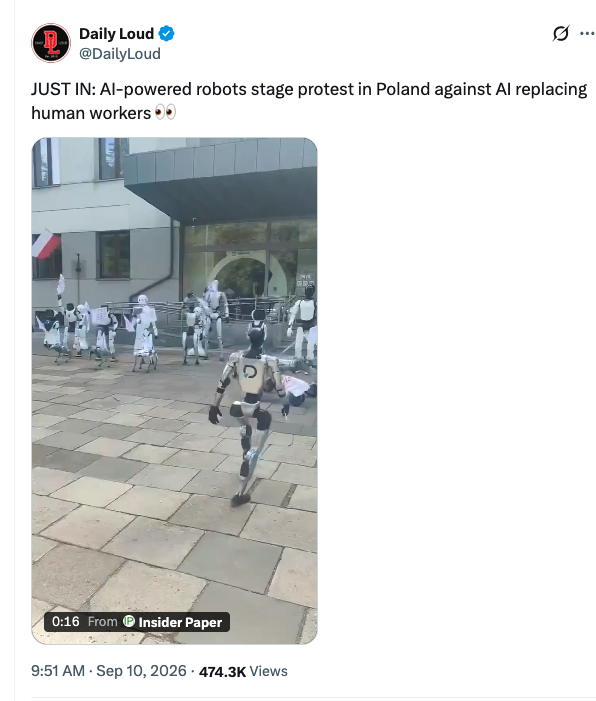
Naturally, I was skeptical.
When I first saw the video, I immediately started asking questions. Was the footage authentic? Was it actually filmed in Poland? Did this really qualify as a protest? More importantly, were these robots somehow acting independently, or was there an organization behind the event using robots to send a message about artificial intelligence and automation?
Normally, I probably would have dismissed the claim as fake, AI-generated, or completely exaggerated. Instead, I decided to investigate it using a method we recently learned called SIFT, which stands for Stop, Investigate the Source, Find Better Coverage, and Trace Claims to the Original Context. The defining feature of SIFT is lateral reading. Rather than deciding whether information is trustworthy by looking only at the original post, you leave the page and use outside sources to verify the claim. I am going to show you step by step how to do this because I want you to be fully prepared in the inevitable event of you crossing misinformation online.
Here’s how I applied the process.
Step 1: Stop
The first step was simply to pause before reacting.
The video was strange enough to make you wonder but didn’t appear to be obviously faked. There are humanoid robots and artificial intelligence has advanced rapidly in recent years. At the same time, the idea of robots protesting against AI seemed almost absurd.
This step is important because many misleading claims spread when people react emotionally instead of taking a moment to think critically.
Step 2: Investigate the Source
Next, I investigated where the claim actually came from.
Next, I investigated where the claim actually came from.
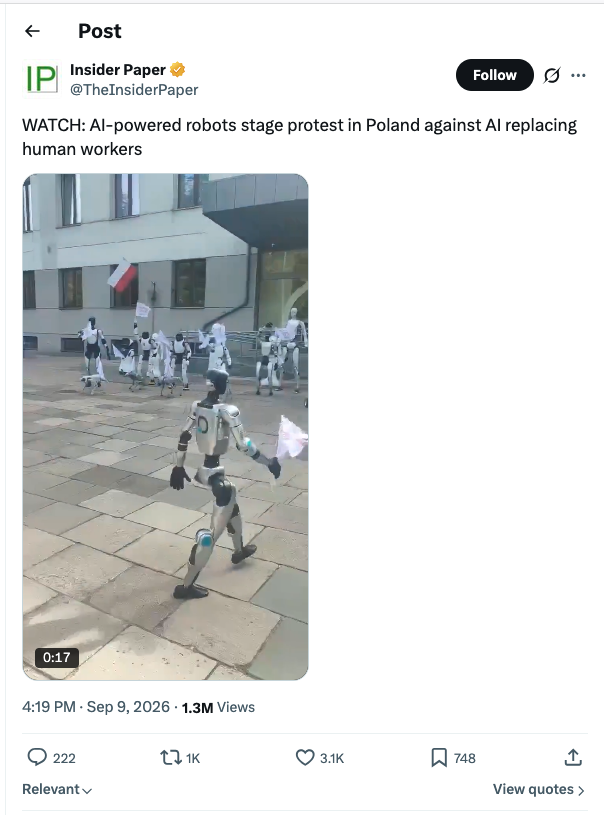
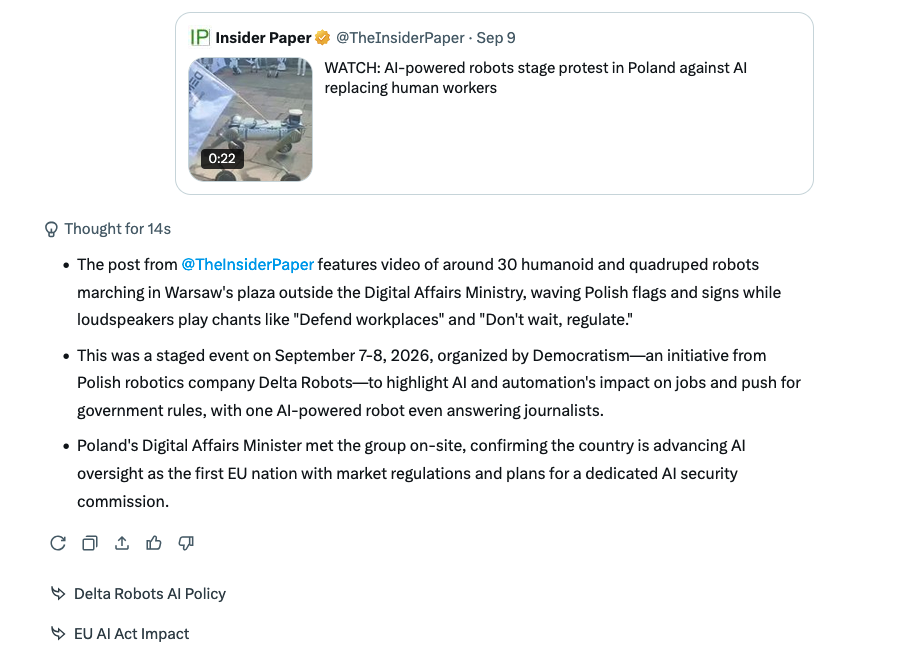
Daily Loud wasn’t the original source of the information, so I followed the trail as far as I could. That led me to a post from @TheInsiderPaper, but there still wasn’t much information beyond the headline and video clip. I had more questions than answers, so I decided to leave X and look for better coverage from independent sources. This immediately raised another important lesson: even when a source appears more legitimate than the account that shared it, a lack of context can still make verification difficult. Rather than accepting the claim based on a repost, I needed more independent confirmation
Step 3: Find Better Coverage
This is where the investigation became much more interesting.
I took a screenshot from the video and performed a reverse-image search through Google. The search returned multiple results discussing the event, but many were simply reposts on social media platforms like Facebook and Instagram. Since those sites were mostly repeating the claim, I continued searching and switched to Google’s News tab.
That led me to several established publications covering the story.
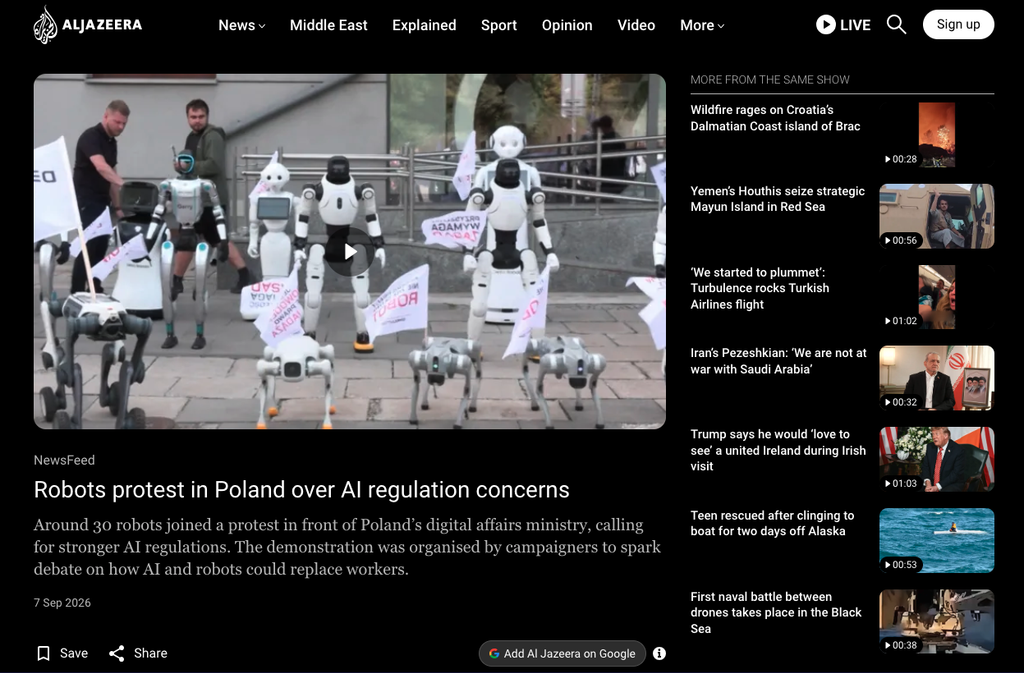
An article from Al Jazeera reported that approximately 30 robots participated in a demonstration organized to generate discussion about the impact of AI and automation on workers. Another report described organizers calling for greater regulation of artificial intelligence, not because robots were independently protesting, but because human organizers wanted to start a conversation about the future of work.
By this stage, I was no longer relying on a single social media post. Several established news outlets were reporting the same event and confirming many of the same details. That didn’t necessarily prove every aspect of the claim, but it gave me enough confidence to continue tracing the story back to its source. The story was starting to seem legitimate, but I still wanted to find out who had actually organized the event.
Step 4: Trace the Original Context
The final step was tracing the claim back to its original context.
I found an article from the Hungarian Conservative identifying the organizers as Democratism, a social initiative focused on the labor-market effects of AI and automation. The article also identified Delta Robots as the technology partner that supplied the machines used during the demonstration. According to the report, around 30 humanoid and quadruped robots participated in the event outside Poland’s Ministry of Digital Affairs. The goal was not to suggest that robots had become self-aware or politically active. Instead, the robots were being used symbolically to draw attention to concerns about automation and job displacement.
This completely changed the way I understood the original claim.
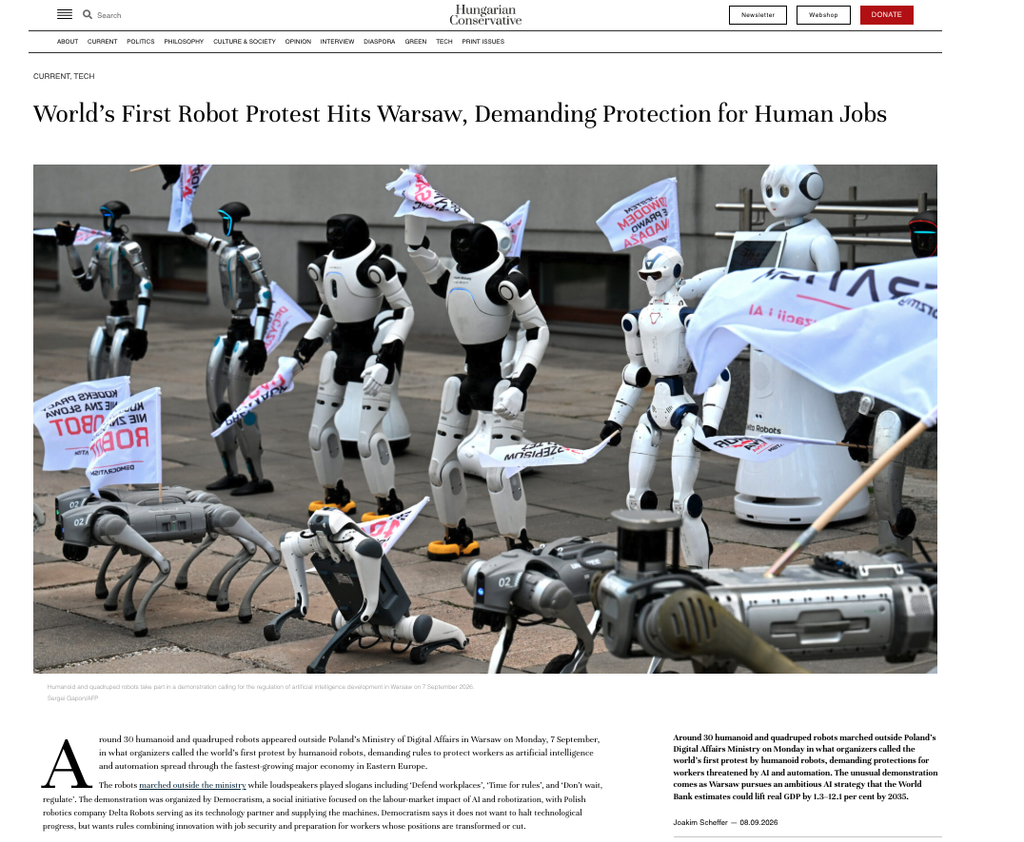
The robots were real. The protest was real. However, the framing of the social media post lacked critical context. It implied that robots themselves were protesting, when in reality the demonstration was organized by people using robots to communicate a message about artificial intelligence and employment.
Conclusion
When I’d completed the SIFT process, I determined the claim was true, but the original social media post was an oversimplification of what actually happened. The robots in the video weren’t protesting independently against AI stealing jobs from humans. Instead, they were part of a human-organized demonstration intended to spark discussion about automation, regulation, and the future workforce.
More importantly, this exercise reminded me why verification is important. Had I just read the original post, I would have had an incomplete understanding of the story. By using lateral reading, reverse-image searches, and multiple independent sources, I was able to move beyond the headline and understand the larger context.
That is exactly why methods like SIFT are so valuable. The goal isn’t simply to decide whether something is true or false. It’s to understand the full story before sharing it with someone else. I hope that you are able to use this method to enhance your media literacy.
