
One of the recurring themes in this course is that misinformation is not just a user problem. Platforms themselves are important in determining the kind of information people are exposed to, how it spreads and what happens when false information begins to circulate. For this assignment on evaluating current platforms’ efforts to reduce misinformation, I looked at two platforms I use regularly: X and YouTube. Both companies say they’re trying to reduce misinformation, but they’re taking very different approaches to the problem. After reviewing their current policies, independent research, and my own experiences using both platforms, I found that neither platform has solved the misinformation problem. Instead, they are making different decisions about where and how to intervene in the flow of information.
X: Community Notes and “Freedom of Speech, Not Reach”
X’s current moderation philosophy is built around what the company calls “Freedom of Speech, Not Freedom of Reach.” X often prefers to leave questionable posts up but makes them more difficult to find and provides context through Community Notes, rather than delete them altogether. The platform also uses a combination of machine learning, user reports, human moderators, and account-level enforcement actions (X Corp, 2025).
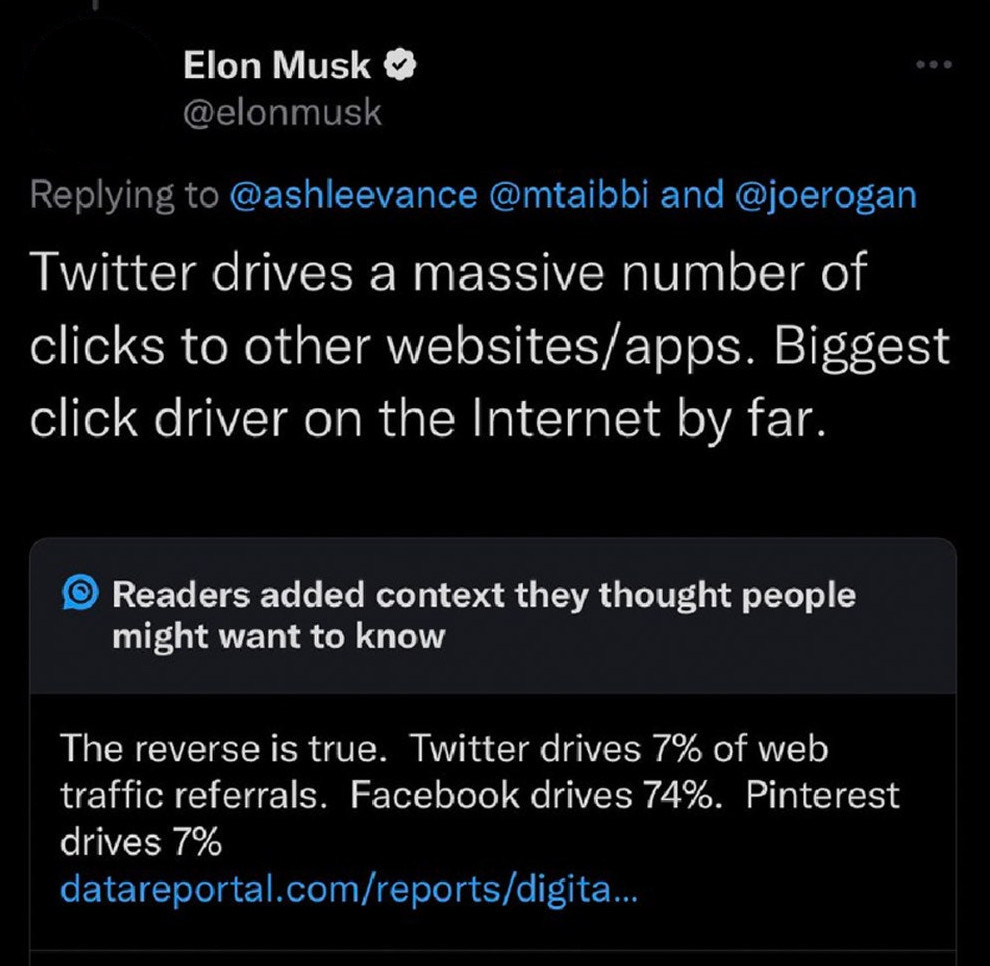
The most interesting part of X’s system is Community Notes. Instead of relying on professional fact-checkers alone, users can suggest contextual notes on posts that may be misleading. If contributors from different viewpoints agree that a note is helpful, it becomes visible beneath the original post. X describes this process as a way to collaboratively add context to misleading information.
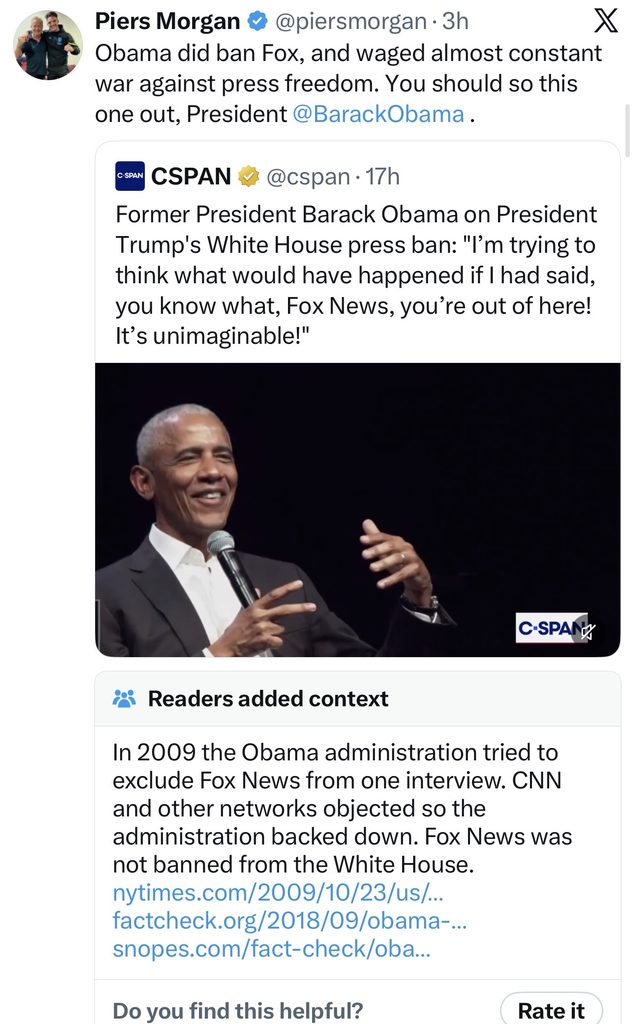
While researching this assignment, I encountered a perfect example myself while scrolling X. I came across a post from political commentator Piers Morgan discussing comments from Barack Obama. The Community Note attached to the post did more than label the claim as false. Instead, it offered more context and pointed readers to sites like FactCheck.org, Snopes and the New York Times. What I found interesting is that Note essentially promotes the use of lateral reading. Rather than asking users to trust the original post, it pointed them toward additional sources so they could investigate the claim themselves.
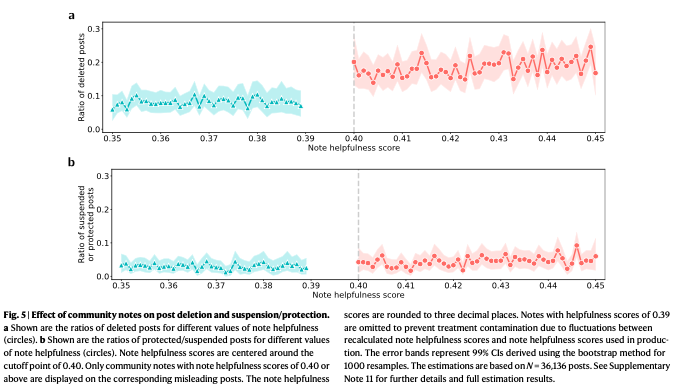
The best evidence I encountered for Community Notes was a study published in Nature Communications in 2026. Researchers looked at 237,180 fact-checked posts that were shared more than 431 million times in total. Once Community Notes became visible, reposting of misleading content dropped by approximately 61.2%, and posts were significantly more likely to be deleted by their original authors (Chuai et al., 2026).
But the study also identified a major flaw. Community Notes often arrive too late. The average delay between a post and the appearance of a Note was approximately 62.9 hours, while misinformation often spreads within just a few hours. Because of this timing problem, the overall reduction in misinformation was much smaller than the impressive 61.2% figure suggests. Researchers estimated the total reduction in reposts at only about 14.9%.
X also features a built-in AI function called Grok. Grok is an independent generative AI/information tool that is a component of X. Users can ask it to investigate claims, but it’s not the same as X’s official system for moderating misinformation. I often use Grok to fact-check information on X but I could not find anywhere in my research where X declares that Grok determines which posts are misinformation. Like other generative AI, Grok can make mistakes.
My takeaway is that Community Notes and Grok are trying to solve the same problem in different ways. Community Notes relies on people to add context and fact-check claims, while Grok relies on AI to gather and summarize information. Both can be helpful when you’re trying to figure out whether a claim is legitimate, and I personally use Grok all the time when I come across some wild story and think, “Did this actually happen?” The problem is that neither one should be treated like the final word on what’s true. Community Notes seem to work well once they’re attached to a post, but research suggests they often take too long to appear and misinformation can spread long before a correction shows up. If X could speed up that process and get helpful notes in front of users sooner, I think the system would be much more effective.
YouTube: Remove, Raise, Reduce, Reward
YouTube takes a different approach. Historically, the company referred to its misinformation strategy as the Four Rs: Remove, Raise, Reduce, and Reward. Violating content can be removed, authoritative sources can be elevated, borderline content can be downranked, and trusted creators can be rewarded through recommendations and monetization systems.
Even though the Four Rs framework was introduced back in 2019, a lot of those ideas are still reflected in YouTube’s current approach today. According to YouTube’s misinformation policy, it removes certain types of content that create a serious risk of real-world harm. That includes things like manipulated videos or old footage that falsely presents itself as a current event. At the same time, YouTube also recognizes that context matters. Content may be allowed to stay online if it’s being used for educational, documentary, scientific, artistic, or public-interest purposes, even when it discusses misinformation or controversial topics.
One reason I chose YouTube is because I encountered a questionable video there during my media diet assignment. The video said three TikTok influencers died while hiking in Death Valley. The production was professional, the story seemed plausible and many of the commenters took it for fact. However, after performing my own verification process, I could not find credible evidence that the event had actually occurred.
Interestingly, that experience does not necessarily prove YouTube failed at blocking misinformation. The video may have been misleading without meeting YouTube’s threshold for removal. That difference became one of the most interesting parts of the research. YouTube is not attempting to eliminate all misinformation. Instead, it focuses on misinformation likely to cause significant harm.
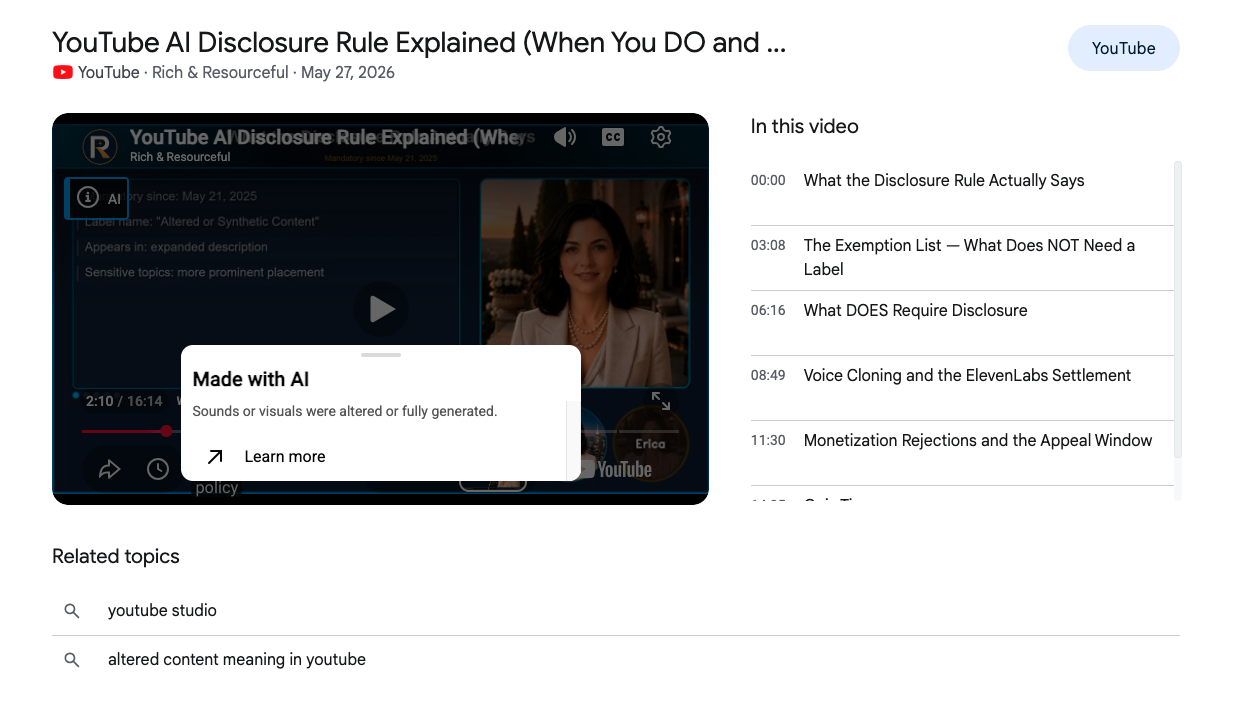
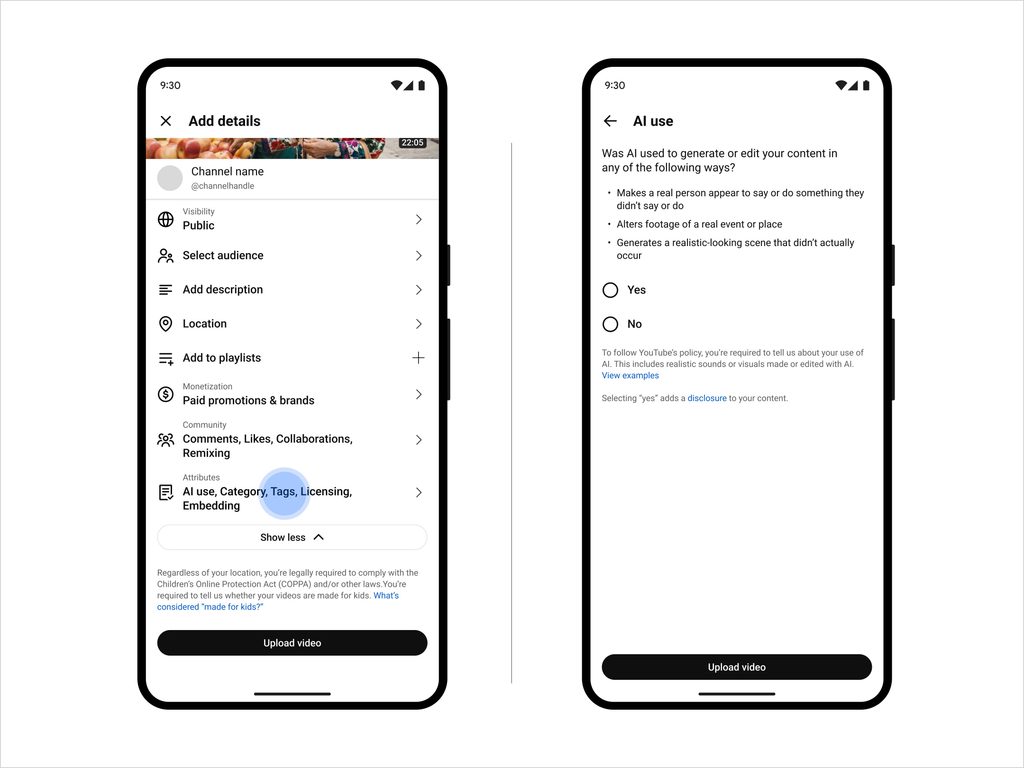
Current YouTube policy also includes information panels, promotion of authoritative sources, recommendation adjustments and new AI disclosure requirements. The company increased its tagging efforts for realistic AI-generated or AI-manipulated content in 2026, as it’s more and more difficult to distinguish real media from synthetic media.
The bigger question, though, is whether any of these efforts actually work. After digging through the research, I found that the answer isn’t as straightforward as I expected. One thing that kept coming up was how difficult it is for YouTube to balance misinformation policies with context. A 2023 ACM study by Van Natta, Masadeh, and Hamilton found that YouTube often recommends content similar to whatever a viewer is already watching. That means someone watching conspiracy-related videos may continue getting more of the same type of content recommended to them (Van Natta et al., 2023). On the flip side, the researchers also found that watching debunking or fact-checking content can push recommendations in the opposite direction. In other words, the recommendation system doesn’t just influence what people watch next; user choices matter too.
In June 2025, The New York Times reported that YouTube had quietly loosened some of its moderation standards for videos considered to be in the public interest. According to the report, moderators were told to give more consideration to free expression when reviewing certain political, social, and cultural content. In some cases, videos that might previously have been removed could now stay online if YouTube determined there was enough public interest in the discussion. YouTube says it is trying to balance freedom of expression with reducing serious harm, but the change has also raised questions about whether more misleading content could remain on the platform (Grant & Mickle, 2025).
Another 2021 Study from the ADL challenged the popular idea that YouTube’s algorithm automatically sends ordinary users down an extremist rabbit hole. The researchers found that most consumption of extremist content came from people who were already interested in those topics in the first place. In other words, the recommendation algorithm may play a role in what people see, but viewing certain content doesn’t automatically mean someone will be persuaded by it. Exposure and persuasion are not necessarily the same thing (Chen & Nyhan, 2021).
Final Thoughts
In the end, I think both platforms deserve some credit for trying to tackle misinformation, though neither system is perfect.
X is heavily dependent on Community Notes and contextual correction. Research suggests the approach is effective once users see the correction, but the system struggles with speed.
YouTube has removal systems, recommendation controls, authoritative sources, information panels and AI labels. The company has built a more centralized moderation structure, but researchers continue to question issues such as consistency, transparency, and contextual judgment.
If I had to make recommendations for improvements, I’d say that X should focus on faster deployment of Community Notes and that YouTube should be more transparent about how moderation decisions are made. In either case, tools on the platforms can help, but they are not a substitute for media literacy. One of the things I learned repeatedly in this course is that misinformation travels faster than corrections. Ultimately, users still need to verify information for themselves rather than assuming any platform can completely solve the problem.

References
Barrett, P. M., & Hendrix, J. (2022). A Platform ‘Weaponized’: How YouTube Spreads Harmful Content – And What Can Be Done About It. NYU Stern Center for Business and Human Rights. .
Chen, A. Y., & Nyhan, B. (2021, February 5). Exposure to Alternative & Extremist Content on YouTube | ADL. ADL. https://www.adl.org/resources/report/exposure-alternative-extremist-content-youtube
Chuai, Y., Pilarski, M., Renault, T., Restrepo-Amariles, D., Troussel-Clément, A., Lenzini, G., & Pröllochs, N. (2026). Community-based fact-checking reduces the spread of misleading posts on X (formerly Twitter). Nature Communications, 1. https://doi.org/10.1038/s41467-026-72597-0
Grant, N., & Mickle, T. (2025, June 9). YouTube Loosens Rules Guiding the Moderation of Videos. Nytimes.Com; The New York Times. https://www.nytimes.com/2025/06/09/technology/youtube-videos-content-moderation.html
Milne, S. (2025, September 18). Community Notes help reduce the virality of false information on X, study finds. University of Washington News; UW News. https://www.washington.edu/news/2025/09/18/community-notes-x-false-information-viral/
Mohan, N. (2022, February 17). Inside Responsibility: What’s next on our misinfo efforts- YouTube Blog. Blog.Youtube; YouTube Blog. https://blog.youtube/inside-youtube/inside-responsibility-whats-next-on-our-misinfo-efforts/
The YouTube Team. (2019, September 3). The Four Rs of Responsibility, Part 1: Removing harmful content. Blog.Youtube; YouTube Blog. https://blog.youtube/inside-youtube/the-four-rs-of-responsibility-remove/
Van Natta, J., Masadeh, S., & Hamilton, B. (2023). Investigating the Impacts of YouTube’s Content Policies on Journalism and Political Discourse. Proceedings of the ACM on Human-Computer Interaction, CSCW1, 1–28. https://doi.org/10.1145/3579499
X Corp. (2025). 2025 Transparency Report. Transparency. https://transparency.x.com/en/reports/global-reports/2025-transparency-report
X Safety. (2023, April 17). Freedom of Speech, Not Reach: An update on our enforcement philosophy. Blog.x.Com. https://blog.x.com/en_us/topics/product/2023/freedom-of-speech-not-reach-an-update-on-our-enforcement-philosophy
Youtube Support. (2026). Misinformation policies – YouTube Help. Google Help. https://support.google.com/youtube/answer/10834785?hl=en&utm_