
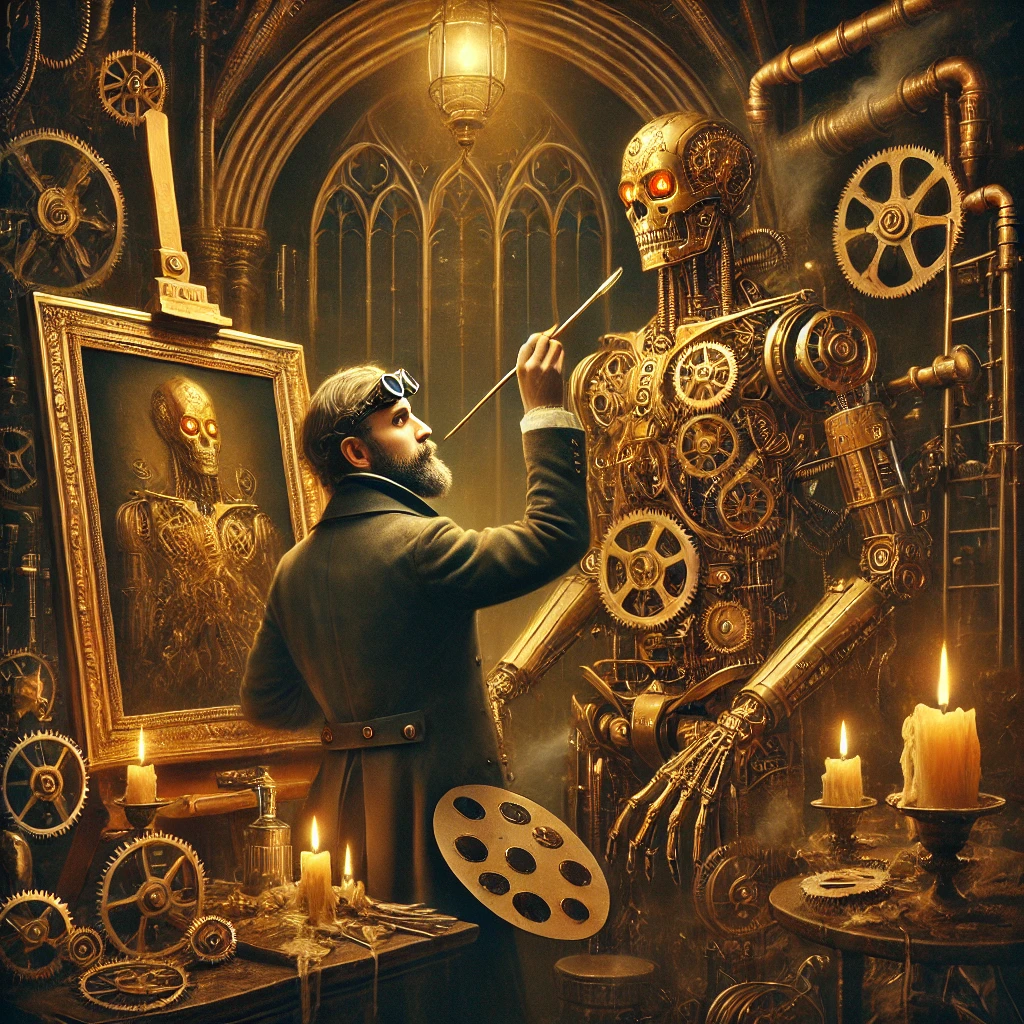
As I’ve been working through this course, one of the biggest questions that keeps coming up is this: who is actually the creator when AI is involved?
To explore that question, I decided to look at creativity from three different angles using images. First, I included a stock image of a woman painting on a canvas. That image represents what we usually think of as traditional creativity: a human being physically creating something from scratch, using their own skill, effort, and imagination. For me, this is the most familiar version of what it means to be a creator.
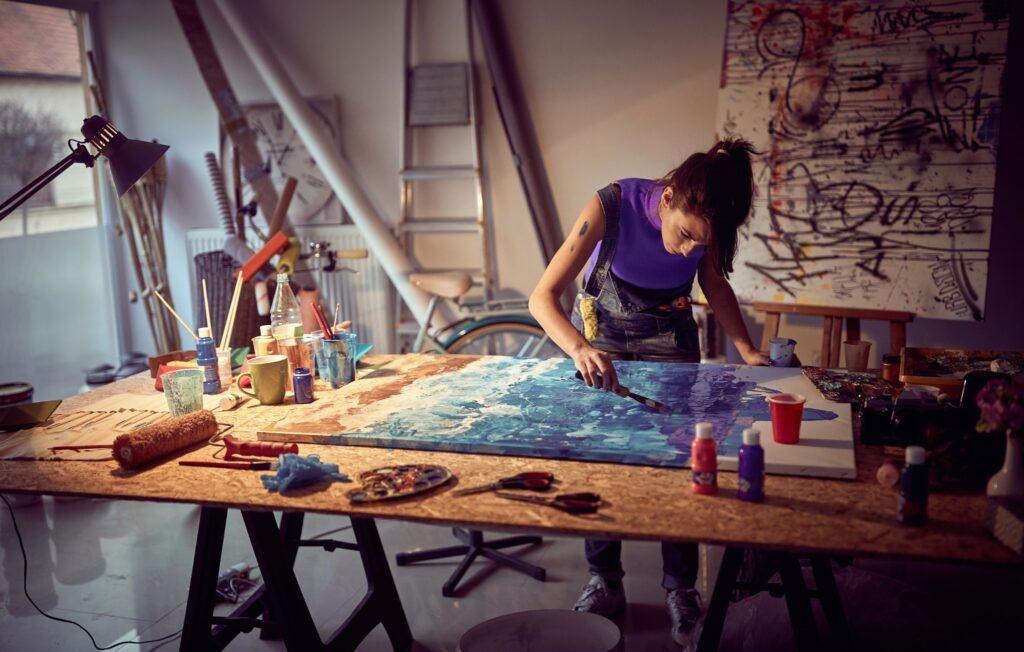
Image by luckybusiness via Adobe Stock
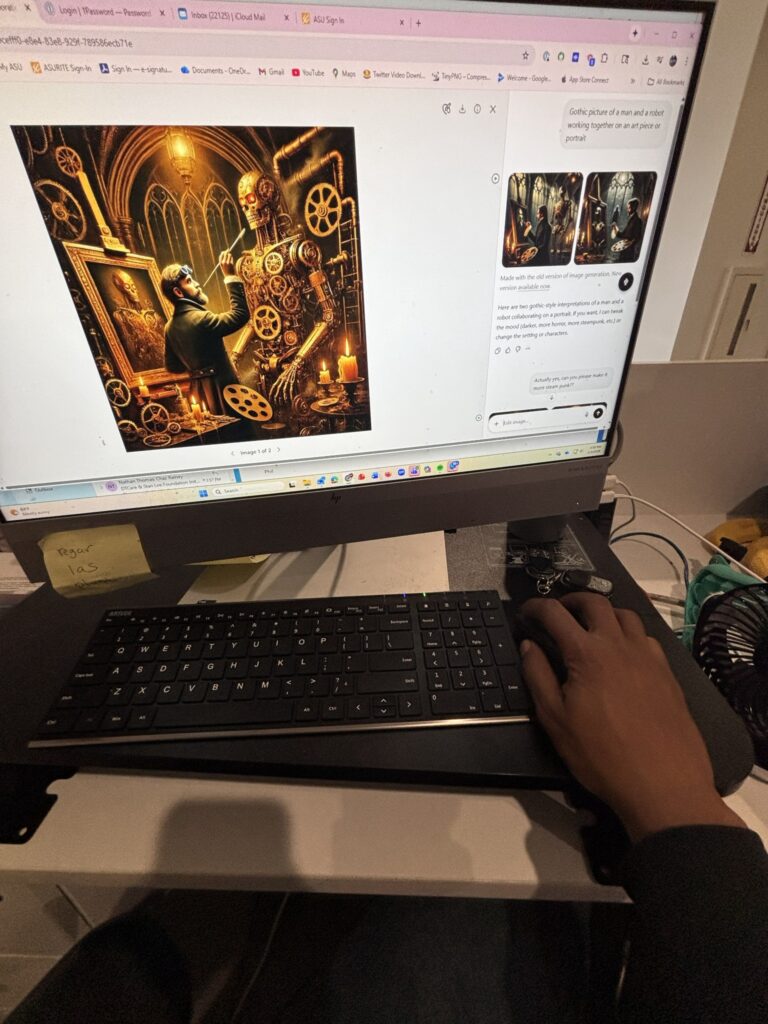
Next, I included a photo I took myself, showing me using an AI tool to generate an image. This one feels a little different. I’m still involved in the process, but instead of physically creating the image, I’m guiding it. I’m writing prompts, making decisions, and shaping the outcome, but the actual image is being produced by the machine. It feels less like creating and more like directing. But in truth, this type of technology almost feels too good to be true. It is similar to magic or some other extraordinary ability; however, it is a power over which I have complete control.
Finally, I used an AI-generated image of a human and a robot painting together on the same canvas. This image is a perfect representation of what this moment feels like. It’s not fully human creativity, and it’s not fully machine-generated either. It’s something in between. That’s what makes this whole conversation so interesting and, honestly, a little complicated.
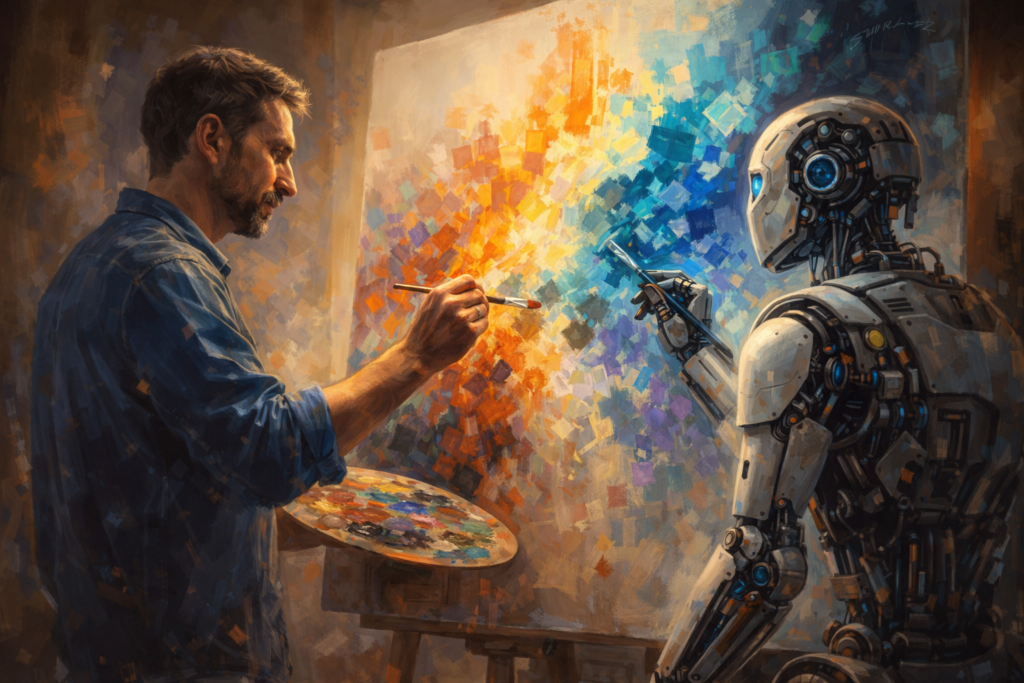
This ties in direclty to what we’ve discussed about AI and copyright. The U.S. Copyright Office has already said that fully AI-generated work doesn’t qualify for protection without meaningful human input. That makes sense, because if the machine is doing most of the creative work, it changes the way we think about who is the author.
At the same time, AI tools are becoming more powerful and more accessible. As we learned from our readings, these tools have an impact not only on art and media, but also on business, misinformation, and even science. That means the conversation is no longer limited to ownership. It’s about responsibility.
Overall, I don’t think AI is replacing creativity, but it is definitely redefining it. The lines are starting to blur, and as creators, we’re going to have to think more carefully about our role in the process. Not just what we create, but how we create it.
