
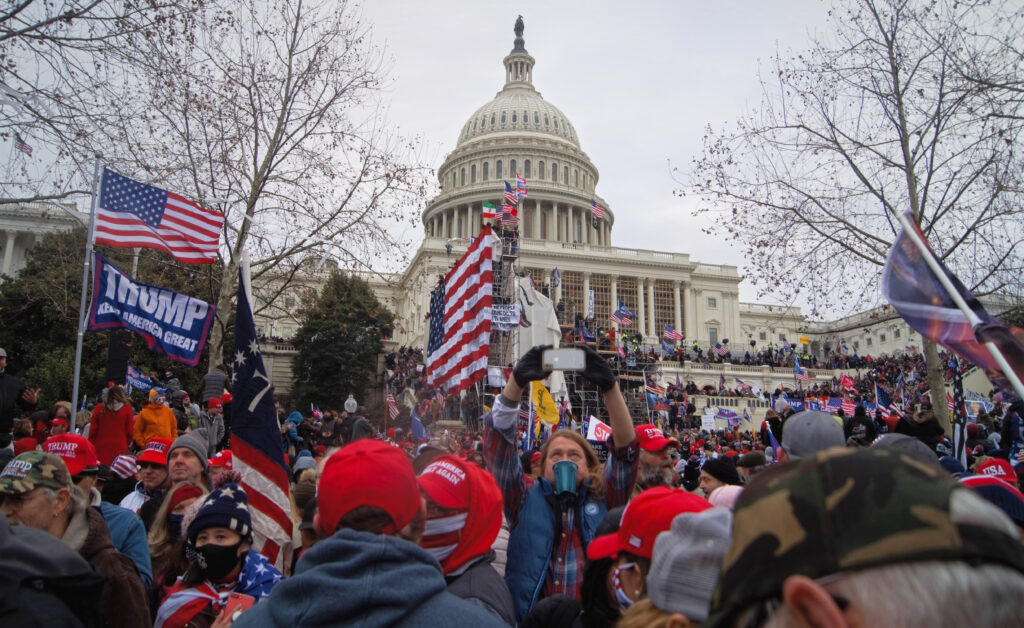
January 6 was an event that opened our eyes to a tough truth about American democracy: the online world is not just a space for chatting, social discourse, and sharing images; it has become a powerful force capable of shaping political reality. For years, social media platforms amplified misinformation, conspiracy theories, and political extremism, often under the banner of “engagement.” Then, after the Capitol attack, those same platforms quickly stepped in, suspending accounts and attempting to prevent further chaos.
Jack Balkin argues that platforms now function as central institutions of the 21st-century public sphere, curating and organizing public discourse in ways that profoundly affect democratic participation. The issue is not simply whether platforms moderate too much or too little. The deeper problem is that their engagement-driven business models reward outrage, polarization, and emotional intensity in ways that can destabilize democracy itself. At the same time, government actions, such as state laws to limit police recordings and broad international plans to tackle cybercrime, show how easily regulations can turn into suppression. Protecting free expression today requires structural reform that reins in corporate power without handing the state the authority to police political speech.
Private internet companies do offer important benefits when it comes to protecting speech. They can act quickly in moments of crisis, as seen when Facebook suspended former President Trump following the Capitol attack. The Oversight Board’s review of Trump’s actions emphasized principles like legality and proportionality, suggesting that even private companies should be guided by rule-of-law standards when moderating speech. Platforms have also taken steps to address harms like doxxing and the sharing of private residential information, acknowledging the real-world dangers that online exposure can create. In situations where the First Amendment limits direct government intervention, corporate governance can sometimes reduce harm more effectively than the state.

Still, we cannot ignore the structural incentives at play. Social media companies are not neutral public forums; they are advertising-driven corporations. As Balkin explains, markets tend to overproduce harmful externalities while underproducing democratic goods. The amplification of extreme content is not necessarily ideological; it is baked into the logic of the attention economy. When profit depends on clicks, shares, and time spent on the platform, outrage becomes good business. That misalignment between corporate incentives and democratic health is a major blind spot. Content policies alone cannot fix a system designed to reward division.
Government intervention is not a simple cure. Arizona’s attempt to criminalize filming police officers risks chilling constitutionally protected oversight, while proposed cybercrime regulations at the United Nations raise serious concerns about vague standards that could silence dissent globally. Regulation aimed directly at speech can erode the very freedoms it claims to defend.

If we want a healthier digital public sphere, reform must focus on structure rather than viewpoint. Antitrust enforcement, stronger privacy protections, and transparency requirements can reshape incentives without empowering the government to decide what speech is acceptable. Democracy depends not only on the right to speak but also on the systems that determine how speech spreads. If the digital public sphere is going to remain resilient, both corporate power and state power must be constrained in ways that strengthen, rather than distort, democratic participation.
