
Source: Adobe Stock
Have you ever opened Instagram or Facebook and just sat there for a second and tought…why am I seeing this?
No, seriously. Not in a casual way, but in a real, almost unsettling way. It’s as if something changed in the background and your entire feed now feels slightly different.
That’s not you being paranoid. That’s sort of the whole point.
In early 2025, many users discovered that they were unexpectedly seeing posts from political figures they had no memory of following. Some even believed that accounts associated with the new presidential administration had been automatically linked to them. According to a New York Times article, this is related to how official government social media accounts are transferred between administrations, as well as some technical issues that arise during the transition. Still, for users, it raised the bigger question: if we don’t even control who we follow, what exactly do we control?
Meta also made another significant move during this time. In an effort to get closer to X’s community notes system, the corporation started to phase out independent fact checkers. In this model, users themselves are responsible for adding context to posts rather than relying on third party verification . That appears to be more democratic in theory. In reality, it also means less centralized oversight of what is true and what is not.
So now we are in this strange place where platforms are both controlling what we see and stepping back from responsibility for what is accurate. That combination should probably make all of us pause for a second.
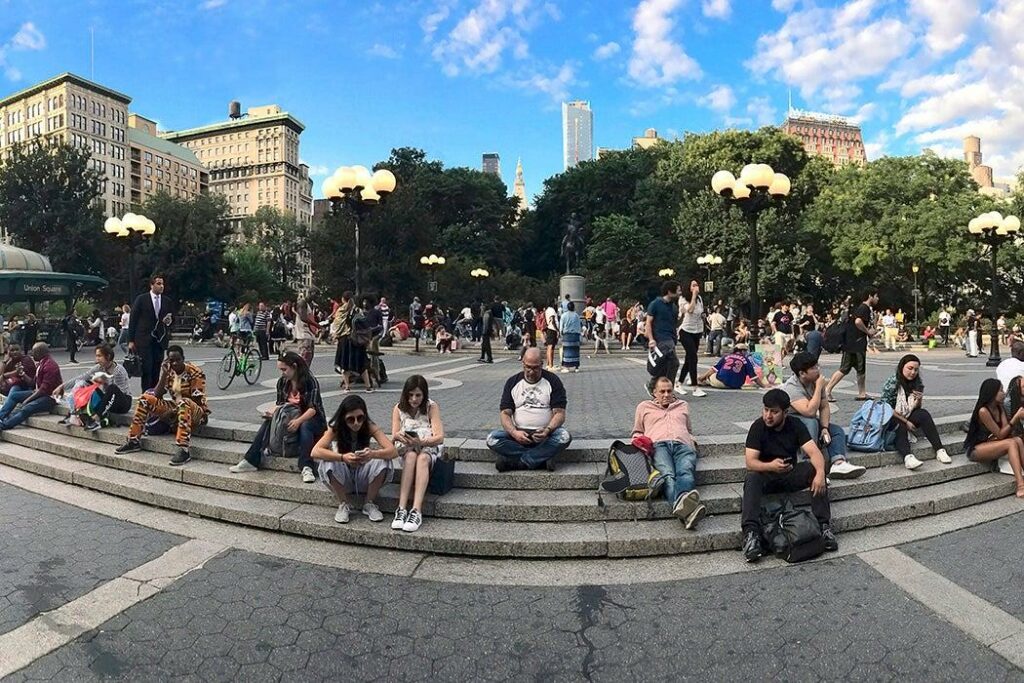
This is where the concept of social media as the “modern public square” becomes relevant. In previous rulings, the Supreme Court has even referred to these platforms in this manner, implying that they serve as crucial forums for public conversation. But here is the problem. These spaces are not public. They are owned by private companies with their own interests, priorities, and algorithms.
And those algorithms are not neutral.
They are designed to keep you engaged. To keep you scrolling. To show you what you are most likely to react to, not necessarily what is most accurate or most important. The Free Speech Project notes that rather than fostering equal access to information, these platforms frequently serve to maintain current power structures. In other words, these platforms don’t just host conversations; they shape them.
So, is there actually something we can do about this?
One way to look at it is through the idea of centralized versus decentralized platforms.
At the moment, our system is very centralized. A small number of companies control most of the conversations that happen online. The benefit of that is convenience. Everything is in one place. It is easy to connect, easy to share, and easy to stay informed. But the downside is obvious. When a small number of companies hold that much power, they also control visibility, influence, and ultimately, public opinion.
A more decentralized model would spread that power out. Instead of one company controlling everything, users would have more ownership over their data, their content, and their communities. That sounds great in theory. More freedom, more control. But it also comes with tradeoffs. Less moderation, more fragmentation, and potentially more misinformation without any clear system for accountability.
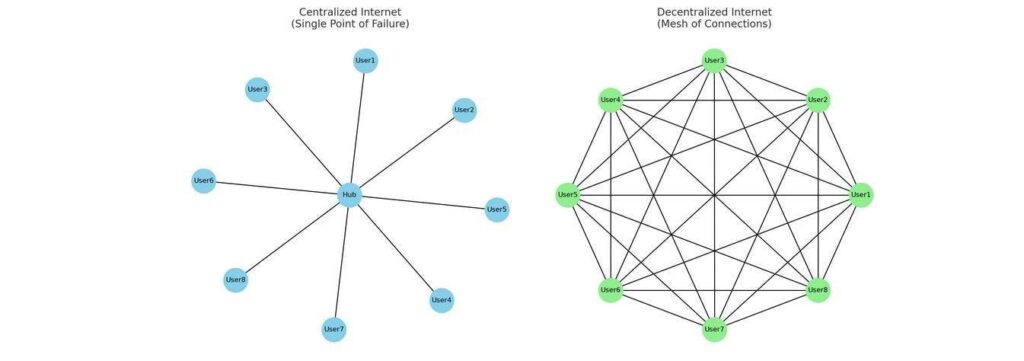
So neither option is perfect.
That’s why the real answer is likely somewhere in the middle.
We don’t need the government to have full control over social media. That opens the door to censorship and political abuse. However, we cannot rely solely on private businesses to govern themselves, particularly when their primary objectives are engagement and profit.
What we need is balance.
We need more transparency about how algorithms work. We need platforms to be clearer about why we are seeing certain content. We need stronger accountability when harmful misinformation spreads. And maybe most importantly, we need more control as users. We should be able to customize our feeds in meaningful ways instead of just reacting to what the algorithms put in front of us.
Because right now, it feels like we are participating in a system we do not fully understand.
And I can say that from experience.
I have definitely noticed how my own feeds shift depending on what I click, what I watch, even what I pause on for a few seconds. One minute I am watching something random, and the next minute my entire feed is built around it. It feels personalized, but it is also a little bit manipulative when you really think about it. Like the platform knows me better than I know myself.
And perhaps that is the bigger issue here.
The internet is not just reflecting who we are. It is shaping who we become.
So when we ask who owns our conversations, the answer is not as simple as saying users or companies or even the government.
The real answer is that control is shared, but not equally.
And until that balance shifts, we are all just participating in a conversation that someone else is quietly guiding behind the scenes.
